Proposal Prepared for Voiceplace Nothing here is live. This is for your review.

Native advertising test · Outbrain

A capped bet on developing the cold audience Meta cannot reach.

Two editorial advertorials, one honest scorecard, a fixed budget and a decision date set before we start. Here is the whole plan, in plain language.

Client: Voiceplace (Roger Love / VoiceQuiz) Channel: Outbrain native Window: 4 weeks Prepared: July 2026

1 The opportunity: why Outbrain, why now

Meta harvests demand. Outbrain develops it.

Meta has been doing one job for Voiceplace, and doing it well: it finds people who already suspect their voice is aging and puts the VoiceQuiz in front of them. That is a harvest channel. It converts demand that already exists. The problem with a harvest channel is that the field is only so big. Once you have reached the people actively looking, growth slows, because you are competing for a pool that is not getting much larger.

Outbrain reaches a different, far bigger pool: the millions of people over 50 who have noticed their voice sounds older but have never once thought of it as something they could fix. They are reading articles, not searching for solutions. You cannot sell that audience with an ad. You have to teach them first. That is what native advertising is built for, and it is why we want to test it now, with a purpose-built editorial page that explains the problem before it ever mentions the offer. Meta harvests. Outbrain develops. Run together, the develop channel keeps refilling the pool the harvest channel draws from, and it builds proof assets that make Meta, email, and every future channel convert better.

Meta · Harvest

People already looking

Finds those who already suspect their voice is aging and converts demand that exists today. Effective, but the field is only so big.

A pool that is not getting much larger

Outbrain · Develop

The far bigger pool who don't know yet

Millions over 50 who notice their voice sounds older but never thought of it as fixable. Reading articles, not searching. You teach them first.

Keeps refilling the pool Meta draws from

2 How it works: the setup

Deliberately boring. That is a feature.

The mechanics here are deliberately boring, and that is a feature. We are not asking you to buy new software, sign up for a new platform, or wait on an Outbrain account rep to wire anything up.

We host the advertorial articles ourselves, on our own tracking infrastructure, on a dedicated domain we control (voicedaily.co). When someone clicks an Outbrain ad, they land on our article, read it, and click through to the VoiceQuiz exactly as they do today. Every step of that path is measured on our side, so we always know how many people clicked, how many read, and how many moved forward.

When a purchase happens, that result reports straight back to Outbrain automatically through a self-serve connection we set up once. There is no manual reporting, no waiting on a rep, and no new tooling for your team to learn. The whole system is live and verified with a test click before a single dollar of real traffic runs.

voicedaily.co · a dedicated domain we control
Step 1
The Ad
A curiosity headline in the Outbrain feed earns the click.
Step 2
The Article
Our editorial page teaches the problem and warms the reader.
Step 3
The VoiceQuiz
They click through to the same funnel that converts today.

3 The test: two stories, one honest scorecard

Same audience, same funnel, same offer. The only thing that changes is the story.

The real question we are answering is simple: does editorial pre-sell open the cold audience for this offer, and if it does, which kind of story wins? So we run exactly two advertorials, built as a clean head-to-head.

Arm A · Science

The science story

It explains the actual reason voices sound older after 50, and that the cause is largely reversible with the right training.

Arm B · Authority

The authority story

Built on Roger's real credentials as the vocal coach behind well-known names, front-loading that credibility for a skeptical older reader.

Whichever wins becomes the channel's template going forward and a proven asset we can reuse in email and retargeting. Because this audience only produces around one purchase a day, we do not wait on purchases to know if it is working. We read the signal as it climbs the funnel, from fastest to slowest.

The metric ladder

Fastest signal at the top, slowest at the bottom.

1 Do the ads earn the click?Click-through rate, reads within days. Fastest
2 Does the article hold the reader and hand them to the VoiceQuiz?The single most telling signal, and it accrues fast. Fast
3 Do those readers start checkout?Our Gate-1 decision metric, matures over the 4 weeks. Decision metric
4 Do they buy?The confirming trend over 4 to 6 weeks, watched but never the sole verdict. Slowest
We spend roughly one purchase-cost per day per arm, about $50 to $70 a day across both, and we reach a clear read on the two upper steps inside four weeks. Purchases are the slow confirming signal underneath, not the thing we wait on to make the call.

4 The honest economics

We are not buying front-end profit, because at this price it does not exist.

Here is the part most agencies save for the fine print, and we are putting it first, because it is the most important thing on this page. At $47 one time, with no recurring revenue behind it, cold native advertising will not be profitable on the first click. The honest cost to acquire a first-time buyer this way runs roughly 12 to 25 times break-even. Anyone who tells you a cold native channel will pay for itself on the front end at this price is selling you something. So we are not going to pretend the front end turns a profit, because it will not, and building a plan on a number that cannot be true corrupts every decision after it.

12–25×
Honest cost to acquire a first-time buyer this way, measured against break-even. Nobody makes the front end profitable at $47 one time.
$1,500–$2,000
The whole capped research bet, over four weeks, with a decision date fixed in advance.

So we are not buying front-end profit. We are buying two things that do pay off, on a capped research bet with a decision date fixed in advance. On that date you get a clear answer to the one question that matters, plus a pipeline and two tested articles you keep either way.

What we buy · 1
A developed cold audience that feeds your warm retargeting, email, and backend.
What we buy · 2
A set of proven editorial proof assets we own and reuse everywhere else.
The scorecard
Judged on audience development and proof assets, not front-end ROAS.
The honesty check: if we spend more and real new customers do not move, we freeze and investigate before spending another dollar. The guardrail is the point.

5 The creative: the two advertorials

Real editorial pages, not ads dressed up as articles.

Both articles are real editorial pages, not ads dressed up as articles. Each is clearly marked as advertising, makes no exaggerated promises, and shows no before-and-after claims. Improvement is described as noticeable, never as a cure. Each article is matched by three Outbrain ads whose promise the article's opening line pays off immediately, so the reader never feels a bait and switch.

The two pages we propose to build (these are the actual drafts)

Arm A · Science

"The Real Reason Your Voice Sounds Older After 50 (And It Isn't Age)."

It opens on the actual mechanism, the age-related deconditioning of the vocal muscles, and the reassuring point that muscle can be retrained. It gives the reader a reason to believe before it ever asks for anything. This arm can launch first, because it needs no outside assets from your team.

Mobile preview of the science advertorial article on The Health Desk, showing the headline, byline, and opening on the voicemail-playback moment.

Mobile preview · The Health Desk (faux publication)

View the full advertorial →

Fully built and ready. Launches first: no outside assets required.

Arm B · Authority

"Hollywood's Top Vocal Coach on Why Voices Age After 50 (And What Actually Helps)."
It leads with Roger's real credentials and the contrarian correction only a genuine expert can make. It is the closest relative to the single best-performing angle already running on Meta, which is why we are confident in it. It is ready to launch the moment we have the real Roger assets.

Mobile preview of the authority advertorial article, leading with a credentialed vocal-coach angle, with clearly marked placeholders where real Roger assets are needed.

Mobile preview · placeholders marked where real Roger assets go

View the full advertorial →

Deck-ready, not launch-ready. The visible dashed placeholders (Roger photo, quote, client roster, testimonial) are exactly the short list in Section 6.

The Outbrain ads that drive to each page

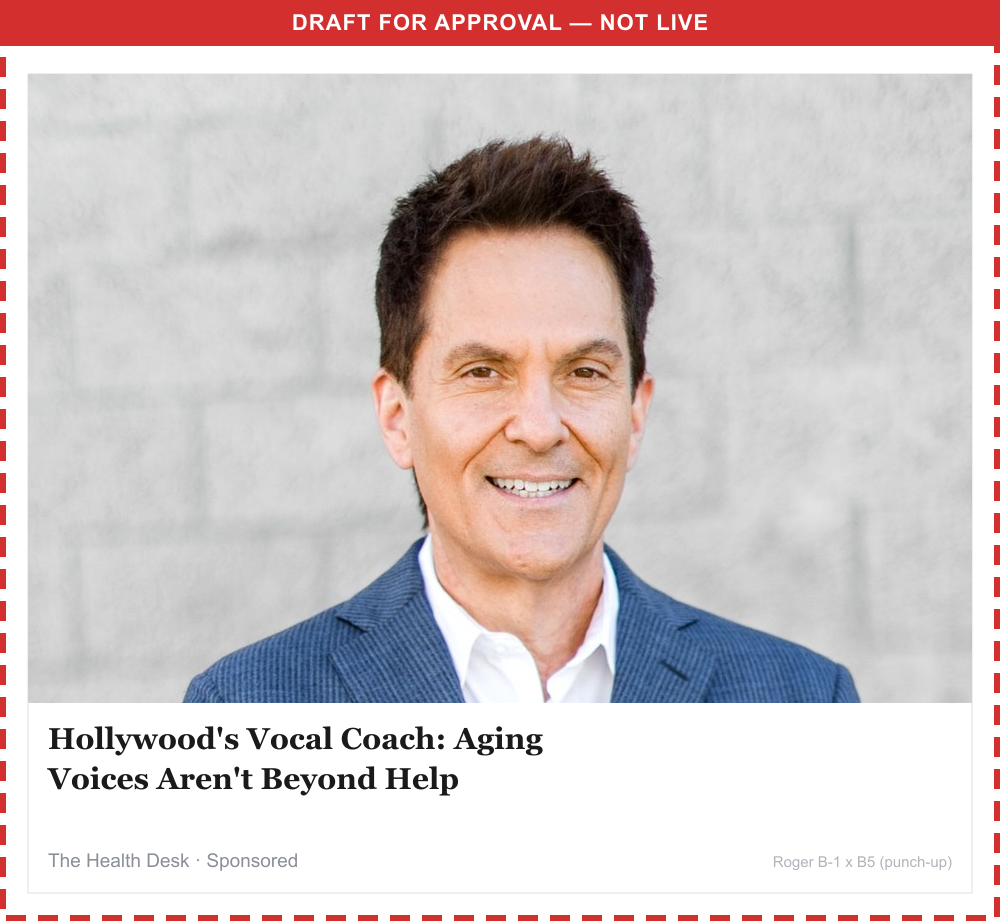
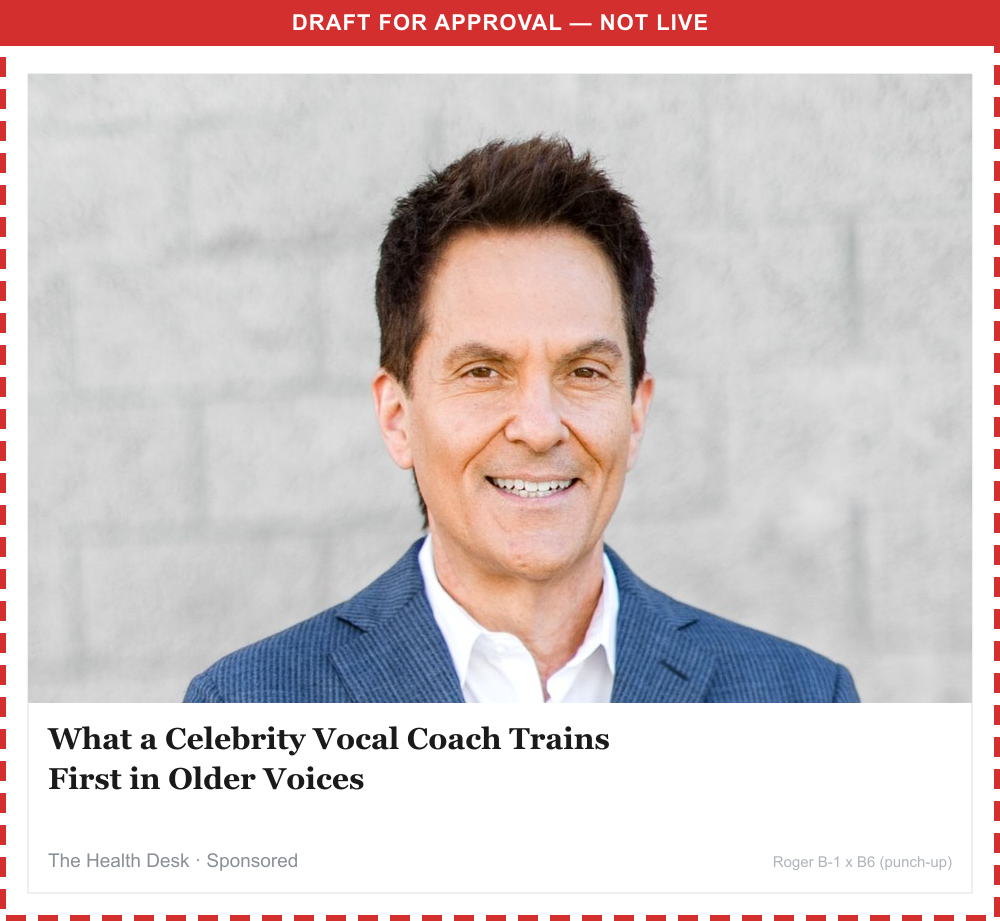
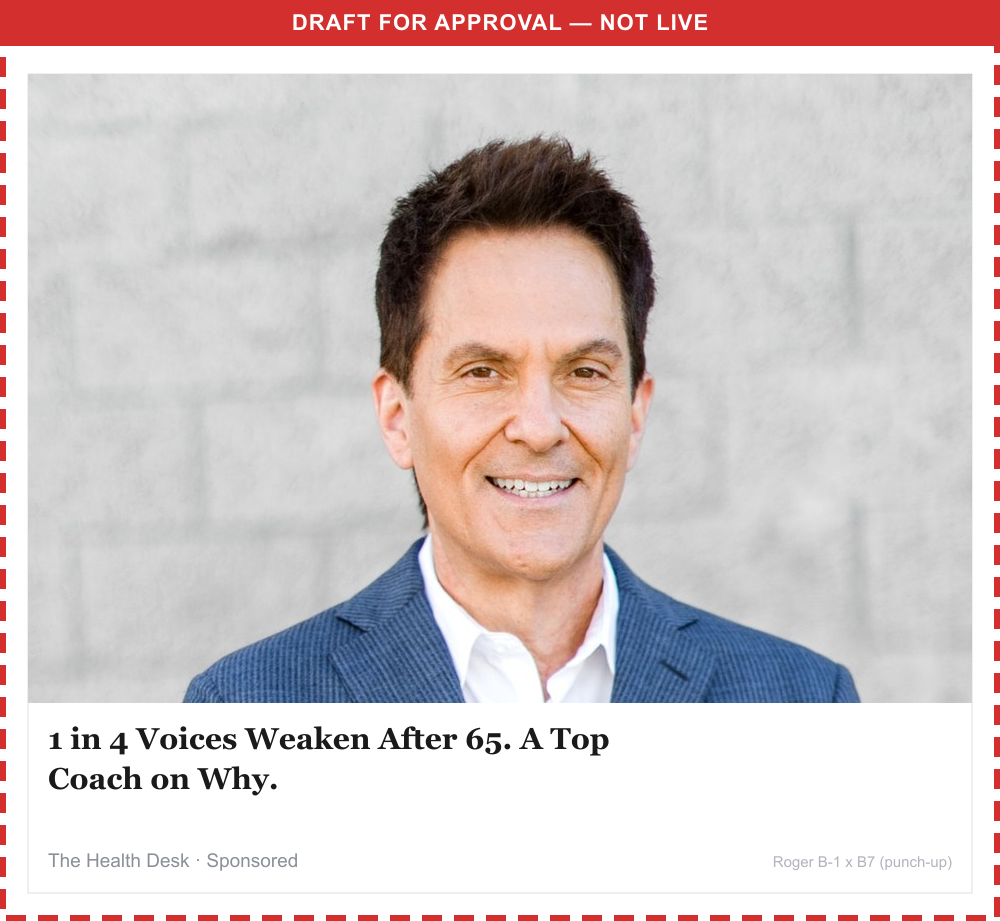
Small curiosity headlines that hand off to the matching article. All faceless thumbnails (no Roger face, per his request and native best practice), all 60 characters or under, all compliance-scanned. Three ads per article.

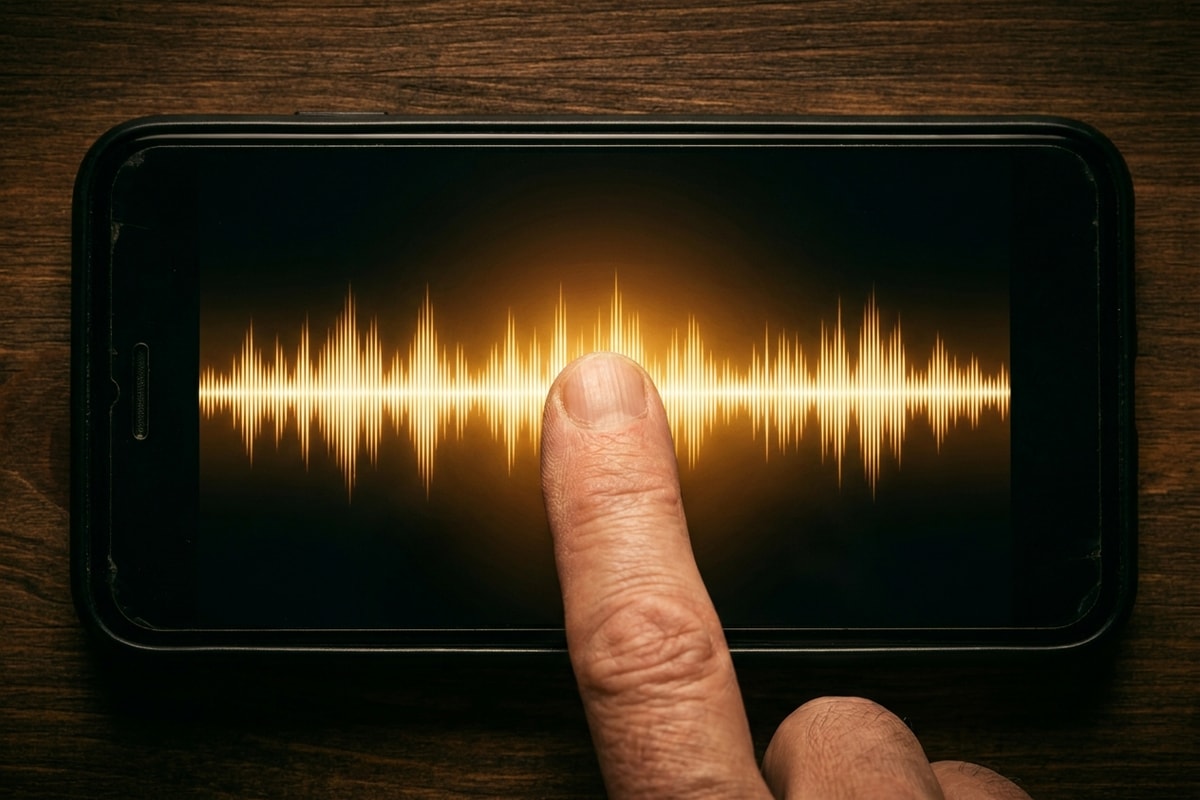
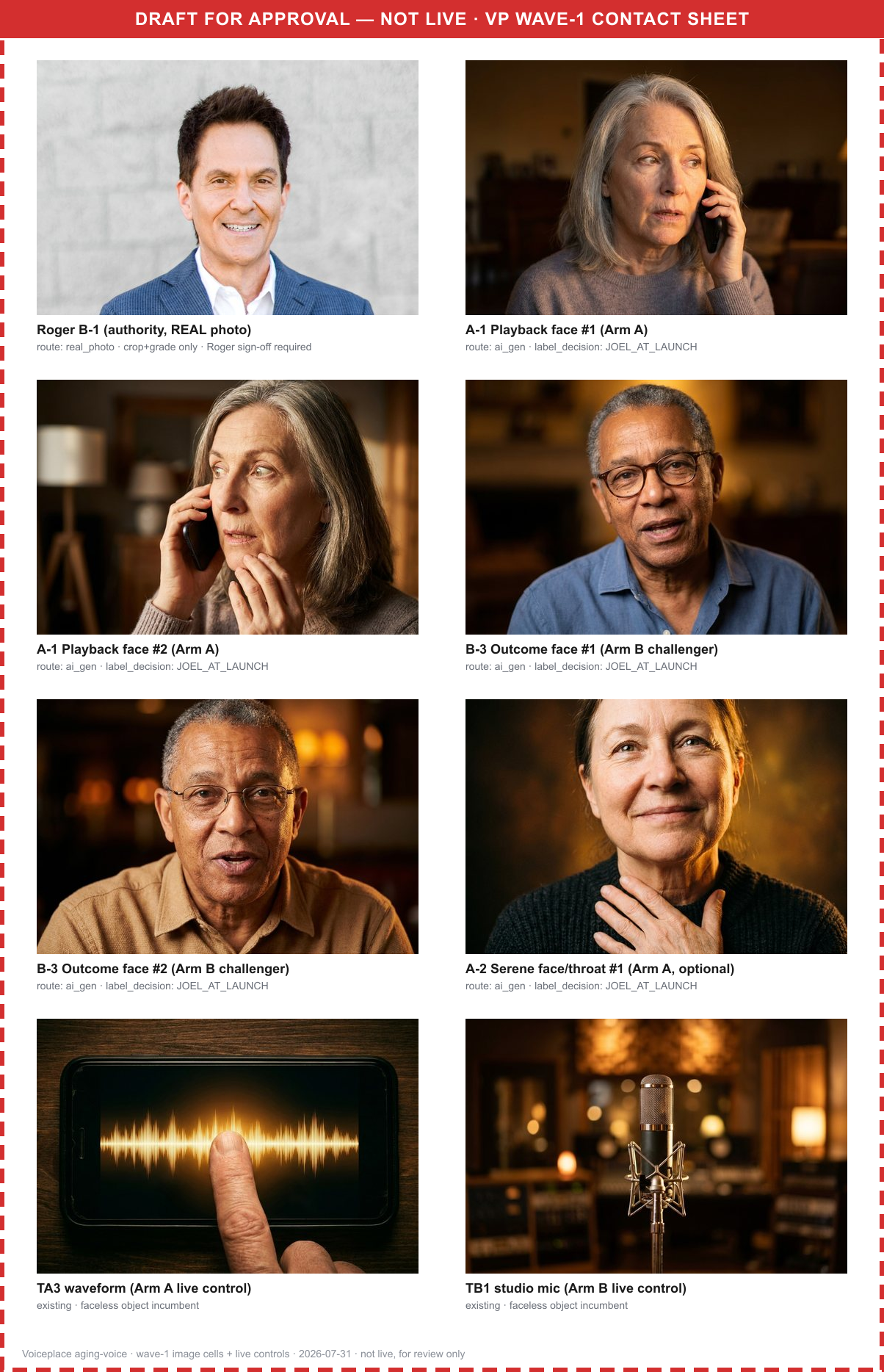
Faceless native ad thumbnail: a phone voice-memo waveform in warm morning light, the playback-recognition moment. Arm A · Science

Drives to the science article

  • The Real Reason Voices Sound Older After 50
  • Why Your Voice Sounds Older Isn't Just Age
  • That Voicemail Playback? It May Not Be Age

Thumbnail leans on the voicemail-playback moment. Observer and discovery framing; the article answers the question in its opening scene.

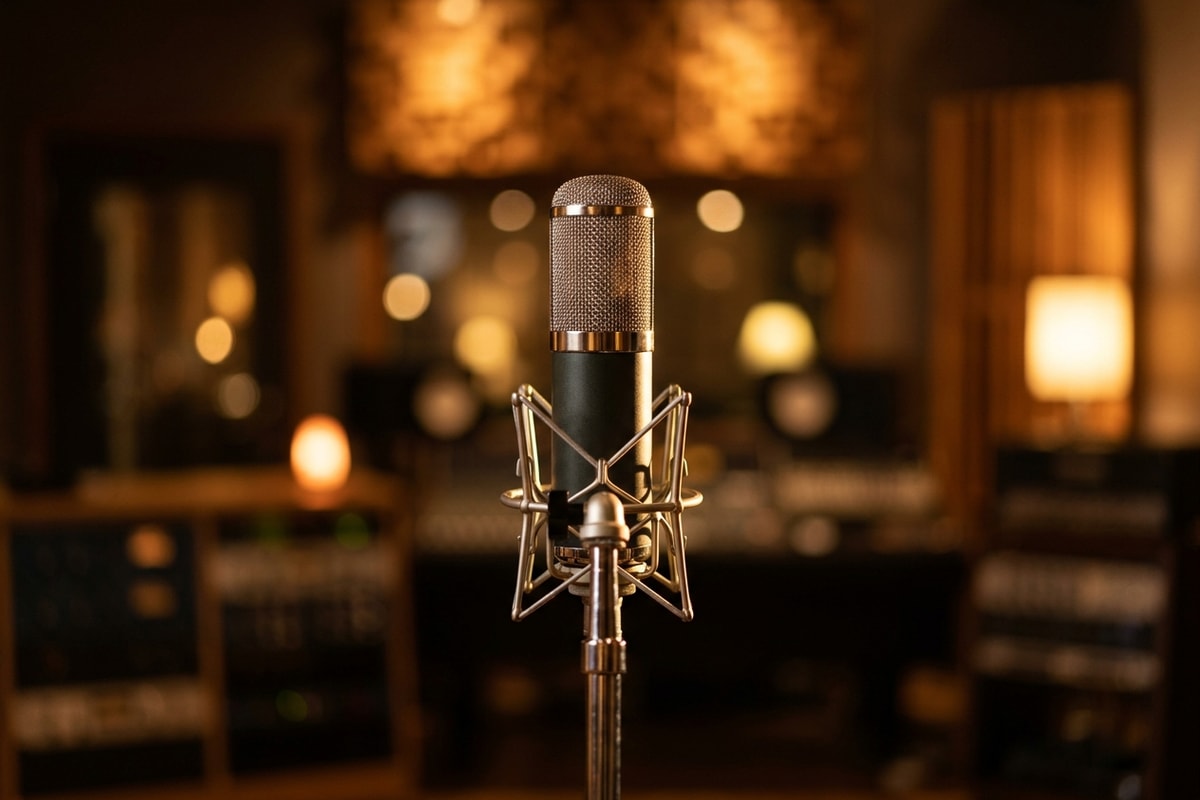
Faceless native ad thumbnail: a vintage studio condenser microphone under warm rim light in a dark recording studio, no person shown. Arm B · Authority

Drives to the authority article

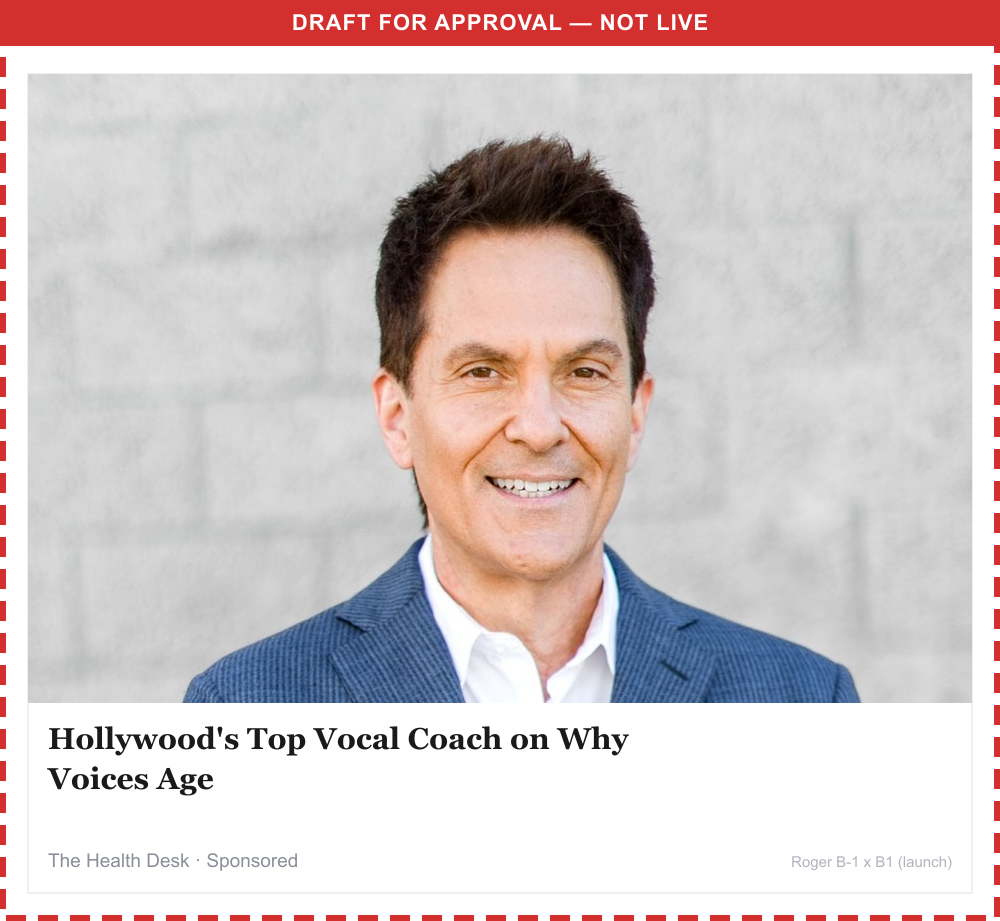
  • Hollywood's Top Vocal Coach on Why Voices Age
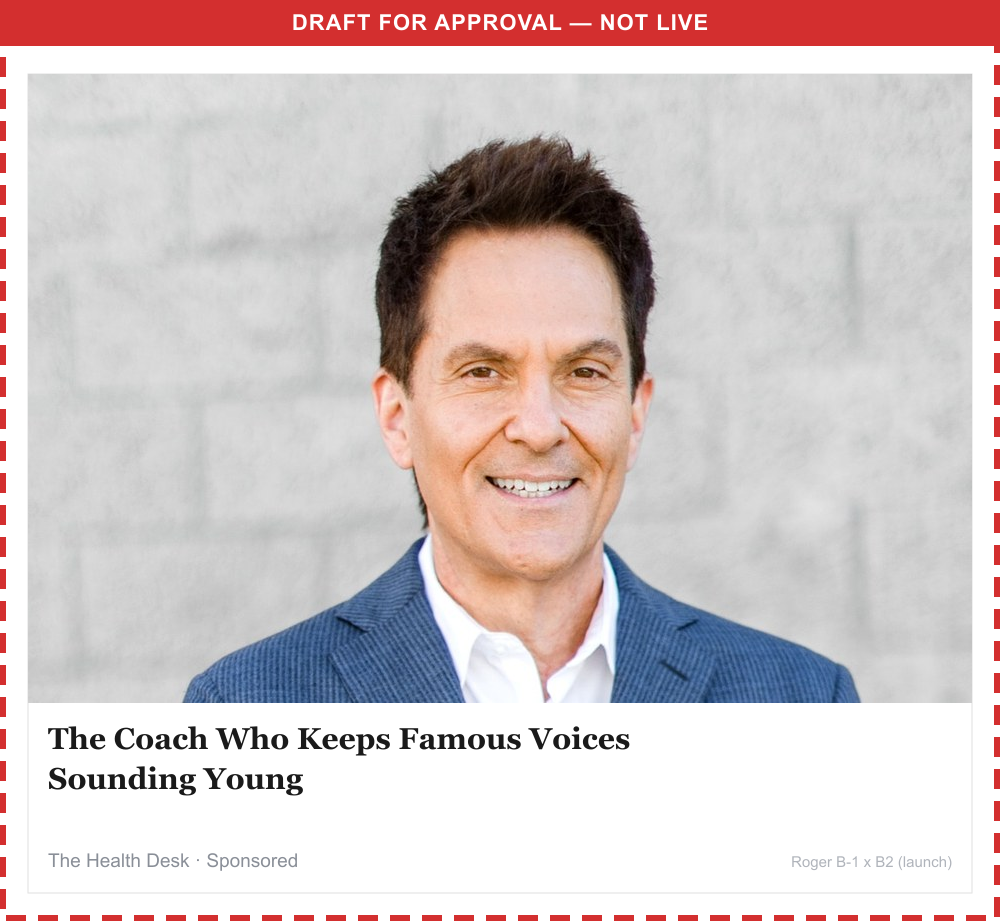
  • The Coach Who Keeps Famous Voices Sounding Young
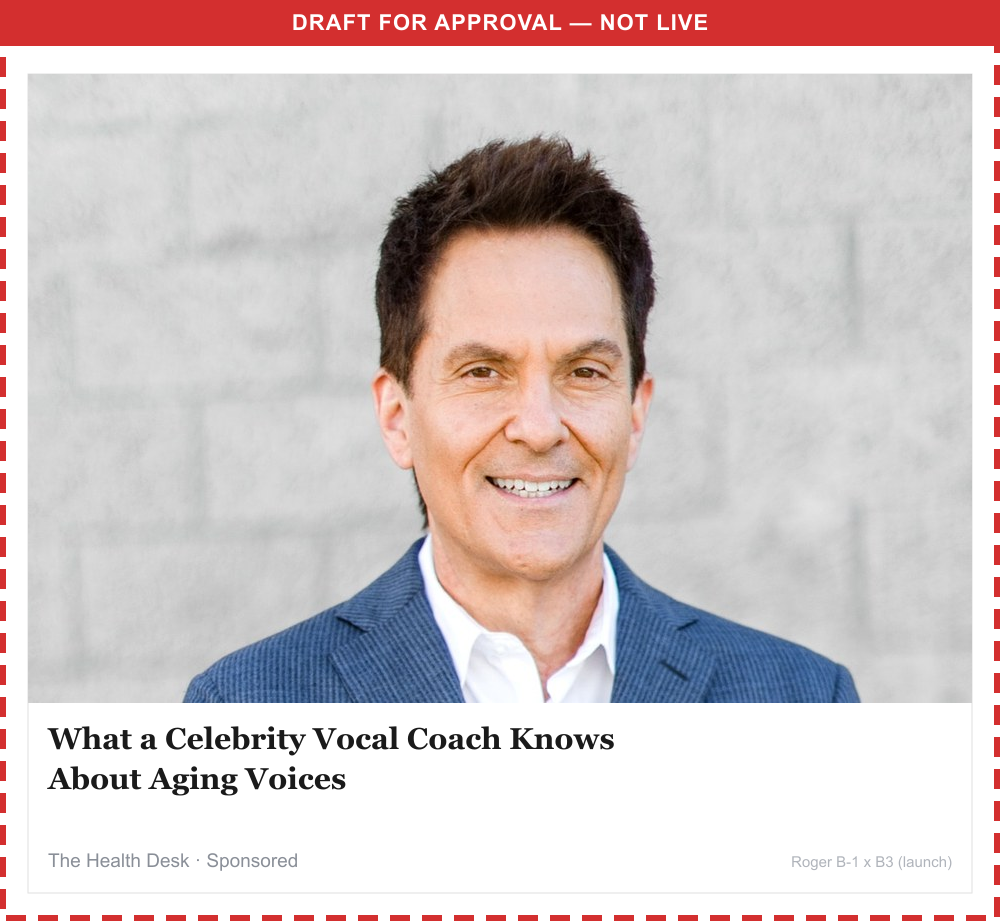
  • What a Celebrity Vocal Coach Knows About Aging Voices
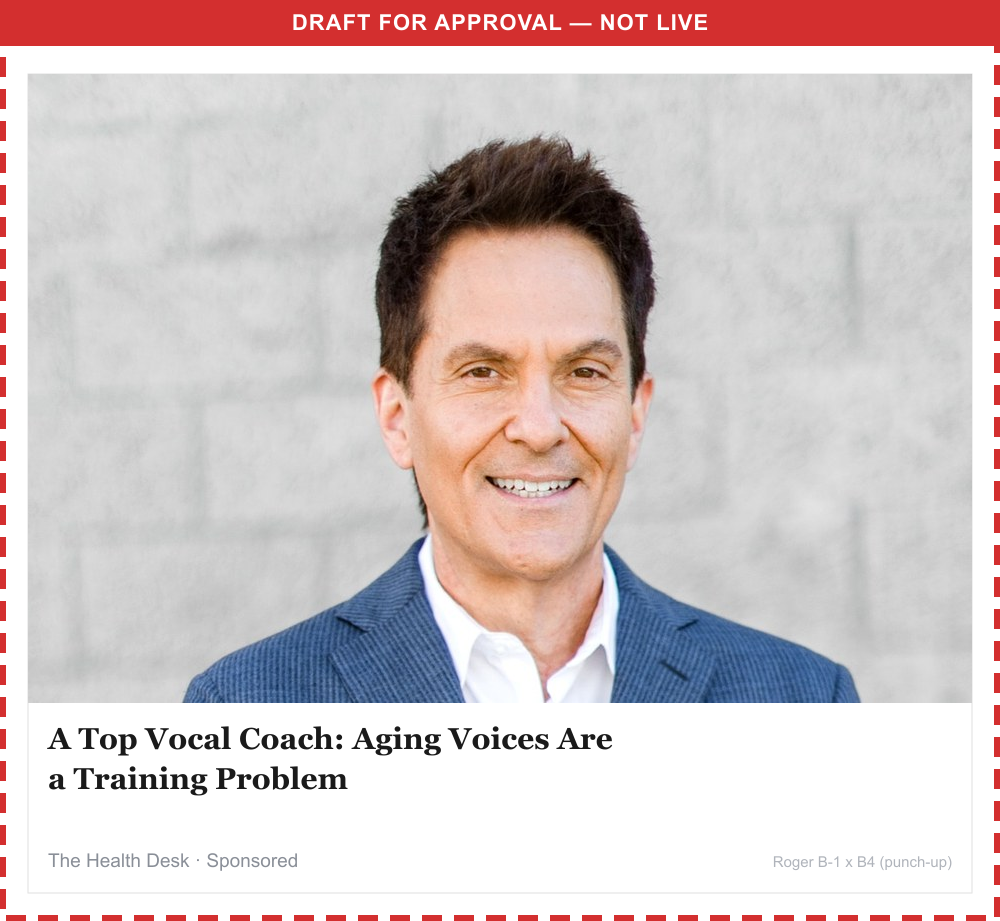
Thumbnail is a warm studio microphone, no person. Authority framing, provable once the real Roger attribution is on the page (see Section 6).

6 What we need from you

A short list from your side.

Arm B is built on Roger being real, so it has to be built on real material. To launch it we need a few things from your side, and they are partnership inputs, not blockers, because Arm A is ready to run while we gather them.

  • One cleared, unaltered photo of Roger (a real photograph, not a retouched or generated image)
  • One on-the-record quote from Roger we can attribute
  • His client roster, or the portion you are comfortable naming, to substantiate the authority
  • One real testimonial from a customer over 50

That is the full list. With it, both stories run head to head and the test answers its question with maximum confidence. Without it, we still launch the science story and start learning immediately.

7 Next steps and the decision

A defined bet, a defined budget, a defined payout date.

A yes means this: we finish wiring the tracking, verify it end to end on a test click, launch the science story right away, and launch the authority story the moment the Roger assets land. Traffic runs at roughly $50 to $70 a day across both arms for four weeks, inside the capped $1,500 to $2,000 budget.

At the four-week mark we sit down with a clear answer: whether editorial pre-sell opens the cold audience for the VoiceQuiz, which story wins, and a working native pipeline plus two tested articles that are yours to reuse in email and retargeting regardless of the outcome. That decision date is set before we start, so the spend is never open-ended. If the honesty tripwire trips before then, we pause and talk first.

Defined bet
Does editorial pre-sell open the cold audience, and which story wins?
Defined budget
$1,500 to $2,000 over four weeks. Never open-ended.
Defined payout date
A clear answer plus a pipeline and two tested articles you keep either way.

That is the whole proposal.

A yes launches the science story right away and the authority story the moment the Roger assets land. The short list in Section 6 is all we need from you to run both.