For thirty years, a small number of very famous people have had a private answer to a problem the rest of us are told is simply part of getting older: their voices don't fade the way most do.
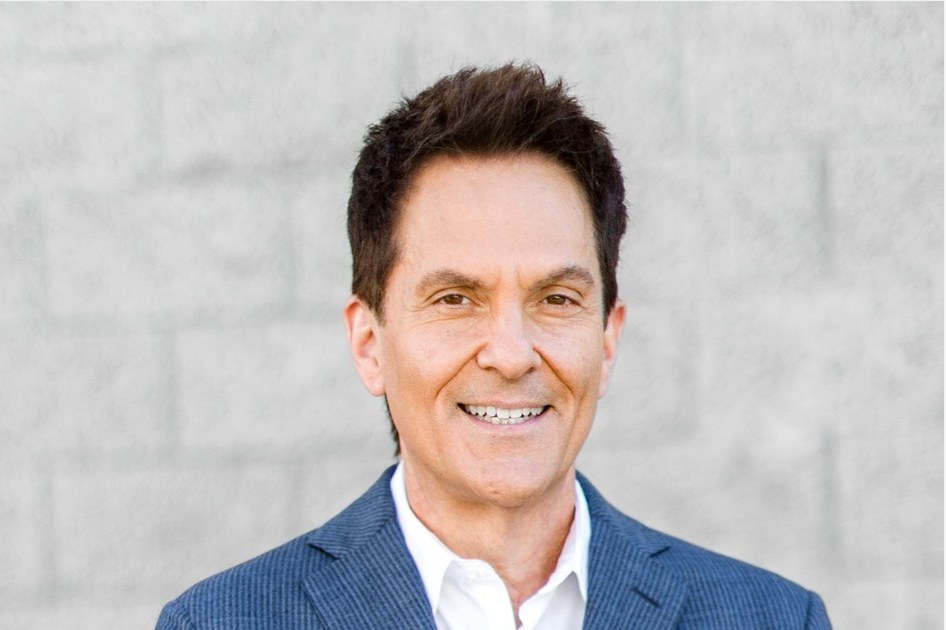
The answer has a name. Roger Love has spent his career as one of the most sought-after vocal coaches in the country, the person performers and speakers call when their voice is their living and they cannot afford to lose it.
The client list tells the story. On the performing side: Jon Bon Jovi, Paul Simon, Jeff Bridges, Bradley Cooper, Jennifer Aniston. And just as telling, the people who talk for a living rather than sing: Tony Robbins, Suze Orman, Brendon Burchard, Dr. Daniel Amen. Careers that run on a voice, many of them at ages when a voice is supposed to be fading.
What is less known is that a growing share of the work Love describes is, in effect, anti-aging for the voice. Not the celebrity kind. The ordinary kind, for people well past 50 who noticed one day that they no longer sound like themselves.
I wanted to understand why a voice ages, and why a coach who works with performers in their 60s, 70s, and 80s seems so unbothered by it. What I found reframed the whole problem.
The moment people finally notice
Almost nobody notices their voice changing in the moment. They notice it in a recording.
A voicemail played back. A video call. A clip a grandchild sent. Suddenly there is a thin, breathy, slightly unsteady voice coming out of the speaker, and it takes a second to realize it is theirs. People describe the same handful of things afterward: the voice sounds weaker, it runs out of air, it sounds old, the range is gone, it turned rough or raspy.
"The instinct is to file it under aging and move on. According to the way Love describes his work, that instinct is the mistake."
"When someone tells me their voice sounds old, I don't hear age. I hear a muscle that has stopped being asked to work. And the moment you start asking again, it starts answering."
Roger Love · draft quote, written for Roger's review; pending his approval
Why the coach isn't worried about age
Here is the reframe that makes his roster make sense.
Love's central teaching, the one running through everything Voiceplace publishes, is that the voice is not a fixed gift you are issued at birth and slowly lose. It is produced by muscle, and muscle is trainable at any age. The voices that keep sounding strong at 70 are not lucky. They are the most consistently trained.
That reframe matters most for the group least likely to hear it. Among adults over 65, research suggests a weakening voice is roughly four times more common, affecting an estimated one in four (Roy et al., 2007; AJSLP, 2023 meta-analysis), which is exactly the population Love says has been told the least useful answer: age.
The age-related weakening of the voice has a clinical name, presbyphonia: the small muscles of the vocal folds become deconditioned, thin, and stop closing cleanly, so air leaks through and the voice turns breathy and weak. Speech-language pathologists treat it with structured vocal exercises, the same logic as physical therapy for any other underused muscle.
Which is the part Love has apparently understood for decades, long before most people over 50 had ever heard the word: an older-sounding voice is usually a deconditioned muscle. And a deconditioned muscle can be reconditioned.
A deconditioned voice can be retrained. See how.
See How Voice Retraining Works$47 to start. 365-day money-back guarantee.
What that does and doesn't promise
The honest version is more convincing than the miracle version, so here it is.
Nobody is claiming a 65-year-old gets a 30-year-old's voice back. This is not medical treatment and it cures nothing. What Love's method and the clinical research both support is a noticeable improvement in strength, steadiness, and range from a few minutes of the right practice a morning, done consistently.
Less air lost before the end of a sentence. A voice that survives a long phone call. A little more of the range that had gone quiet. Modest, and real.
Why "just do vocal exercises" isn't the answer
The catch, and the reason most people who try on their own give up, is that generic vocal exercises are like a generic gym plan: useless until you know which muscles are actually weak.
Two voices that both "sound old" can be deconditioned in completely different ways, one losing low-end power, another losing high range, another leaking air. The right practice for one is close to a waste of time for another.
How Love's method reaches the rest of us
For most of his career, the only way to get this training was to be successful enough to book him. So his team took the method he uses with performers and speakers and built it into a structured online program: short, guided exercises aimed at the specific ways a voice deconditions, the breathiness, the fatigue, the lost range, rather than a one-size plan.
I expected repackaged warmups with a famous name attached. What it actually follows is the same logic as physical therapy: work the specific weaknesses that make a voice sound older, a little every day, and build.
It is $47 to start, with a 365-day money-back guarantee.
The method behind the famous voices, now within reach.
Start Strengthening Your Voice$47 to start. 365-day money-back guarantee.
The students' version of the same idea is less polished, and more direct.
Second student testimonial (Lou Pulkkinen) goes here. Cherie supplied it as a screenshot that has not reached this build; the text drops in verbatim once received, with "Challenge" changed to "method" per Cherie's note.
This addresses a gradual change in your voice over months and years. A sudden change, over days, is a different matter and worth a doctor's visit.
Where to start
You do not have to take anyone's word for it, including the famous coach's. The useful first step is just to see the method for yourself, and whether it fits what you have noticed in your own voice.
It is $47 to begin, with a full year to change your mind. And if the reframe is right, the voice on that voicemail is not the last word. For most people over 50, it is not age they are hearing. It is a muscle waiting to be trained again, by the same principle that has kept a lot of famous voices from ever sounding their age.
It is not age you are hearing. It is a muscle waiting to be trained.
Start Strengthening Your Voice$47 to start. 365-day money-back guarantee.